

If you have ever paused on an Instagram ad promising thicker hair from a single blood draw, you have probably wondered whether the before and after photos hold up to closer inspection. It is a reasonable question. Platelet-rich plasma has moved quickly from a niche regenerative therapy used in orthopedic clinics to one of the most requested non-surgical options for thinning hair in the United States, and the marketing has not always kept pace with the underlying clinical evidence.
The honest answer is yes, PRP hair restoration works for most people who are good candidates for it. Results tend to be visible rather than dramatic, and they develop gradually rather than instantly. Whether the treatment is worth your time and money depends on where you are in the hair loss process, how consistently you follow the recommended schedule, and how realistic your expectations are at the outset.
This article walks through what the research says about PRP for hair loss, who responds best, what a realistic timeline looks like, and the factors that separate strong outcomes from disappointing ones.
How PRP works at the follicle level
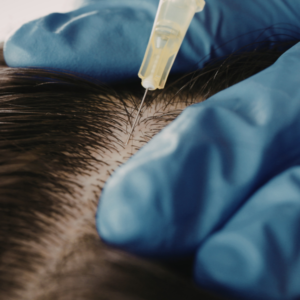
Platelet-rich plasma is a concentrate prepared from your own blood. After a small draw, the sample spins in a centrifuge to separate the platelet-rich layer from red blood cells and other components. That concentrate carries a high density of growth factors including platelet-derived growth factor (PDGF), vascular endothelial growth factor (VEGF), and transforming growth factor-beta (TGF-β).
When this concentrate is injected into the scalp around dormant hair follicles, the growth factors get to work along several pathways at once. They signal follicle cells to re-enter the active growth phase. They support new capillary formation, which improves blood and nutrient delivery to the follicle. They also reduce local inflammation, which matters in hormonally driven hair loss where chronic micro-inflammation contributes to follicular miniaturization over time.
For a deeper walk-through of the underlying biology and the treatment process itself, the full overview of PRP hair restoration in Roseville CA covers each step in detail. This article focuses on the question most people actually want answered: does it work for you?
What the clinical evidence says
PRP for androgenetic alopecia has been studied for more than a decade, and the body of evidence has matured enough that meta-analyses now exist to summarize the findings across many trials. The picture is not one of miracle results, but the data is consistent enough to take the treatment seriously.
A 2019 meta-analysis published in Aesthetic Plastic Surgery, which pooled the results of controlled trials on PRP for androgenetic alopecia, found that PRP injections produced a statistically significant increase in hair density compared with control groups. The average density improvement across the included studies was meaningful enough to be visible to patients in standardized photographs, not just measurable under a trichoscope.
Individual studies have reported follicle density increases ranging from roughly 20 to 30 percent after a standard initial series, with corresponding improvements in hair shaft thickness. Patient satisfaction rates in well-designed trials tend to fall between 70 and 85 percent.
These numbers come with important context. The strongest results consistently show up in patients with early to moderate hair loss who follow a consistent treatment schedule and whose follicles are dormant rather than fully gone. Patients with advanced baldness or scarring alopecias do not respond meaningfully because the follicular machinery PRP relies on is no longer present in the treatment area.
Who tends to see the strongest results
Hair loss is a family of conditions with different drivers, and PRP responds best to some of them. The pattern that emerges from clinical practice and published studies is fairly consistent.
| Best candidates for PRP hair restoration
Patients with androgenetic (pattern) hair loss in the early to moderate range tend to see the most visible improvement, especially when treatment begins before the affected follicles have miniaturized completely. Diffuse thinning, postpartum shedding, and stress-related telogen effluvium also respond well. Women with widening parts and men with crown thinning who still have visible vellus growth are usually strong candidates. |
The factors that predict a good response are largely anatomical. If you can still see fine hairs in the thinning area when you look closely in good light, the follicles are alive and capable of being stimulated. That is the single most important variable. Age matters less than people tend to assume. A patient in their fifties with active follicles and an early treatment course can respond better than a patient in their thirties whose follicles have already shut down.
The patients who respond least are those with advanced baldness in the treatment area (no follicles left to stimulate), active scalp inflammation or infection, certain autoimmune-driven hair loss patterns such as severe alopecia areata, and uncontrolled medical conditions that affect blood quality. A careful consultation rules these out before treatment begins.
A realistic timeline of what to expect
Hair grows slowly. PRP works with that biology, which means visible change takes months rather than weeks. Knowing what to look for at each stage helps you evaluate whether your treatment is working without becoming anxious in the early phase.
| Time after starting | What you may notice |
|---|---|
| First 4 to 6 weeks | Possible increase in shedding during the first few weeks. This is often follicles releasing weak hairs in preparation for new growth, and it is not an indication of failure. |
| Month 2 to 3 | Daily shedding typically decreases. Hair may feel slightly thicker at the root when you run your fingers through it. |
| Month 3 to 4 | Early visible improvement begins. Standardized photos taken at this stage often show small but measurable differences. |
| Month 4 to 6 | Density and coverage improvements become more apparent. This is when most clients begin to feel the visible payoff of the initial series. |
| Month 6 onward | Results consolidate. Maintenance sessions every six to twelve months sustain the improvement over the long term. |
The shedding phase early in treatment is one of the most common reasons clients lose confidence in PRP. It is also one of the most predictable. When dormant follicles are reactivated, they sometimes push out weak existing hairs to make room for stronger replacements. If your provider has not warned you about this shed in advance, it can feel alarming. It usually settles within a few weeks.
Why some PRP treatments do not deliver
When PRP fails to produce meaningful improvement, the cause is almost always one of a small number of factors. Understanding them in advance helps you avoid disappointment and choose a clinic that takes the variables seriously.
Candidate selection. A patient with advanced baldness simply does not have the follicular substrate to respond. PRP cannot create new follicles where none exist. A clinic that accepts every prospective patient regardless of stage will produce some treatments that were destined to fail.
Preparation protocol. Not all PRP is the same concentration or quality. Older single-spin systems produce a less concentrated platelet layer than modern double-spin systems. The specific centrifuge, the activator used, and the volume injected all influence the growth factor density actually delivered to the scalp.
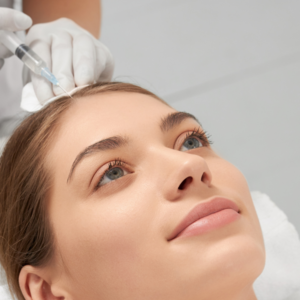
Injection technique. Depth and even distribution across the scalp matter more than people realize. PRP placed too superficially fails to reach the follicle. Injections clustered in one area leave neighboring follicles untreated. Experienced injectors map the scalp before treatment to ensure even coverage of every thinning zone.
Treatment frequency. PRP works through cumulative stimulation. The standard protocol calls for an initial series of three to four sessions spaced four to six weeks apart, followed by maintenance every six to twelve months. Skipping or significantly delaying sessions weakens the cumulative effect because growth factor stimulation is dose-dependent over time.
Underlying contributors. Hair loss caused or worsened by nutritional deficiency, thyroid imbalance, or medication side effects responds poorly to PRP alone if the underlying contributor is not addressed in parallel. This is why bloodwork at the start of a series is often valuable.
Combining PRP with other treatments
For many patients, PRP works best as part of a layered plan rather than as a standalone intervention. The treatments that pair well with PRP target different mechanisms of hair loss, which means each one adds something the others cannot reach on their own.
Topical minoxidil supports the same follicles PRP reactivates by extending the active growth phase. Oral finasteride or topical equivalents address the hormonal driver of pattern hair loss in patients for whom that is medically appropriate. Medical-grade scalp care products improve the local environment in which follicles are trying to grow.
On the in-office side, RF microneedling in Roseville creates controlled micro-channels in the scalp that improve PRP absorption and independently stimulate the wound healing cascade. That cascade has its own follicle-supporting effects, which is why combination protocols often outperform PRP alone in published comparisons.
Lifestyle factors carry real weight as well. Iron stores, vitamin D status, thyroid function, protein intake, and chronic stress levels all influence hair cycling. For patients who are addressing broader aesthetic goals beyond hair restoration, laser-based treatments can also be part of a comprehensive plan. At Body Vine Aesthetics, our laser hair removal in Roseville offers a long-term solution for reducing unwanted hair growth safely and effectively with minimal downtime. Identifying modifiable factors early in a PRP series and correcting them in parallel meaningfully improves the response to treatment.
Common misconceptions worth clearing up
A few persistent ideas about PRP deserve direct attention because they shape how patients evaluate their own results, often unfairly.
The first is that PRP regrows hair where no hair exists. PRP reactivates dormant follicles and strengthens existing ones. It cannot generate new follicles in fully bald areas, which is why early intervention matters so much.
The second is that one session should produce visible change. Single-session PRP rarely produces visible improvement. The protocol is built around cumulative effect across a series, which is why most clinics recommend three to four initial sessions before evaluating the outcome.
The third is that PRP is a permanent fix. Hair loss is generally a progressive condition, and the underlying genetic or hormonal drivers do not stop because you had treatment. PRP slows progression and reverses some of the visible thinning, while maintenance keeps the gains in place.
| PRP at a glance
PRP hair restoration works best when treatment begins early, when the initial series is completed on schedule, and when the patient still has active follicles in the thinning area. Most clients see reduced shedding by month two or three and visible density improvement by month four to six. Maintenance every six to twelve months preserves the gains over the long term. |
Frequently asked questions
How will I know if PRP is working for me?
The earliest reliable sign is reduced daily shedding, which most clients notice between weeks six and twelve. Visible density improvement typically begins around month four. Standardized scalp photographs taken at consistent angles and lighting are the most accurate way to track progress, which is why your provider may take baseline images at your first session.
Can PRP work if I am already on minoxidil or finasteride?
Yes. PRP can be used alongside standard topical and oral hair loss therapies, and the combined effect is often stronger than either approach alone. Tell your provider about any current treatments so the plan accounts for them.
Is the result worth the cost of multiple sessions?
That depends on what you are comparing against. Compared with hair transplant surgery, PRP is far less invasive, requires no recovery, and costs less upfront, though it does require ongoing maintenance. Compared with topical treatments alone, PRP often produces more visible density improvement, particularly in patients caught early. Your provider can help you weigh these against your specific situation.
Does PRP hurt?
Most clients describe the sensation as brief pinches that last only seconds. A topical numbing agent is applied before injections begin, and the needles used are fine gauge. The procedure is well tolerated even by clients who are typically needle-averse.
What happens if I stop maintenance after seeing results?
Without maintenance, the follicles that were reactivated gradually return to their previous trajectory. The decline is not instant, but most patients notice gradual loss of the gains within twelve to eighteen months of stopping. Periodic maintenance sessions preserve the result indefinitely.
Can PRP be used for postpartum hair shedding?
Yes, and it tends to respond well. Postpartum shedding involves a temporary disruption to the hair cycle that PRP is well suited to address. Most providers wait until after breastfeeding ends before beginning treatment, though the timing can be discussed individually.
Find out whether PRP is right for your hair
The most honest answer to whether PRP works is that it works very well for the right patient at the right stage, modestly well for some, and not at all for those whose follicles are no longer viable. A careful consultation is the only reliable way to know which category you fall into.
At Bodyvine Aesthetics in Roseville, a hair restoration consultation includes a full scalp evaluation, a review of your medical history, and a transparent discussion of what PRP can realistically accomplish for your individual situation. If another approach would serve you better, or if PRP makes most sense in combination with RF microneedling for the scalp or other supportive treatments, that conversation happens before you commit to a plan.
→ Schedule your hair restoration consultation
Hair restoration is rarely about chasing a perfect outcome. It is about preserving what you have, reactivating what is dormant, and feeling like yourself again in the mirror.
References
- Gupta AK, Bamimore MA, Foley KA. Efficacy of non-surgical treatments for androgenetic alopecia: a systematic review and network meta-analysis. Aesthetic Plastic Surgery. 2019. https://pubmed.ncbi.nlm.nih.gov/31115672/
- Gentile P, Garcovich S. Systematic review of platelet-rich plasma use in androgenetic alopecia compared with minoxidil, finasteride, and adult stem cell-based therapy. International Journal of Molecular Sciences. 2020. https://pubmed.ncbi.nlm.nih.gov/32365625/
- Stevens J, Khetarpal S. Platelet-rich plasma for androgenetic alopecia: a review of the literature and proposed treatment protocol. International Journal of Women’s Dermatology. 2019. https://pubmed.ncbi.nlm.nih.gov/30859127/